UCSF banner
UCSF home page UCSF home About UCSF Search UCSF UCSF Medical Center

UCSF - University of California San Francisco

  • Patient Care
  • Research
  • Education
  • Department Overview
  • Clinical Sections
  • Advancing Technology
    • MR-guided Focused Ultrasound Surgery
  • Upcoming Seminars
  • People
  • Jobs
  • News
Home >> About Us >> Advancing Technology >> MR-guided Focused Ultrasound Surgery

MR-guided Focused Ultrasound Surgery (MRg-FUS) at UCSF

In July 2010, UCSF became the first site in the country to be awarded a high-end instrumentation grant from the National Institute of Health for purchase of an MRg-FUS system (1S10RR028911-01; Fergus Coakley, Principal Investigator). The installation of the NIH-funded Insightec system in early 2011 will allow UCSF to offer this cutting edge therapeutic technology to patients in Northern California and across the country.

equipment
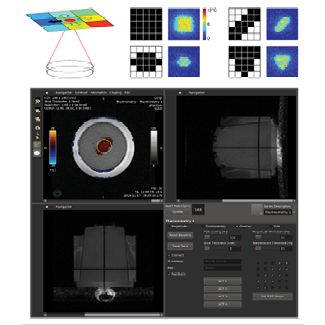
Components of the MRg-FUS system

Our Team

The MRg-FUS program at UCSF is an interdisciplinary effort that involves the active contribution of numerous interested investigators across multiple departments. Team members are grouped according to their specialty and disease site interest. Groupings include:

Radiology Team Members

Fergus Coakley, MD Fergus Coakley, MD is a Professor of Radiology and Urology, Section Chief of Abdominal Imaging, Vice Chair for Clinical Services in the Department of Radiology, and a member of the UCSF Cancer Center. Dr. Coakley moved to UCSF in June 2001 to become Chief of the Abdominal Imaging Section, having previously worked at Memorial Sloan-Kettering Cancer Center as Director of Body MRI. Since 2005, he has served as Program Director for the Departmental T32 training grant from NIBIB (Biomedical Imaging for Clinician Scientists). His primary research interest has been in the local evaluation of prostate cancer extent and aggressiveness by MRI and MRSI. He has a longstanding interest in MRg-FUS, and in 2007 he received a Focused Ultrasound Surgery Foundation Award to support a visiting observership in MRg-FUS at St. Mary's Hospital, London under the supervision of Professor Wladyslaw (Wady) Gedroyc MD.
Jeremy Durack MD

Jeremy Durack, MD is an Assistant Professor in the Department of Radiology and a faculty member in the Interventional Radiology Section. He is an enthusiastic and accomplished junior faculty member with a strong track record. He received a Roentgen Research Award from the Radiological Society of North America in 2006. In 2006/07, he was a fellow on the Departmental T32 National Institute of Biomedical Imaging and Bioengineering Training Grant. His research interests include minimally invasive therapies in interventional oncology and medical device development. 

Adam Jung, MD PhD Adam Jung, MD PhD is an Assistant Professor of Clinical Radiology and a member of the Abdominal Imaging Section at UCSF, with a shared appointment between UCSF and SF VAMC. He has an established interest in prostate MRI, having obtained his PhD in this field during residency in San Antonio.
John Kurhanewicz PhD

John Kurhanewicz, PhD is a Professor in the Department of Radiology, a member of the UCSF Cancer Center, the Quantitative Biology Institute, and the UCSF-UCB Bioengineering Graduate Group. He has been at UCSF since 1987, where he has become recognized internationally for his work on in vivo MRI/MRSI of prostate cancer. He directs a large Prostate Cancer Imaging Research Group that performs approximately 500 research and clinical MRI/MRSI studies of prostate cancer patients per year. He is currently collaborating with GE Healthcare in the first clinical trial of hyperpolarized 13C in prostate cancer patients.

Thomas Link MD

Thomas Link, MD is a Professor in the Department of Radiology, Section Chief of Musculoskeletal Imaging, and Clinical Director of the Musculoskeletal Quantitative Imaging Research group. He moved to UCSF in December 2003, having previously worked as a vice chairman at the Department of Radiology at the Technical University of Munich, Germany. He is internationally known for his expertise and research interests in bone tumor imaging and image-guide ablation, and has established a bone tumor ablation service at UCSF.

Sharmila Majumdar PhD

Sharmila Majumdar, PhD is a Professor in the Department of Radiology, a member of the UCSF Comprehensive Cancer Center, a member of the Quantitative Biology Institute and the UCSF-UCB Bioengineering Graduate Group, and Vice Chair for Research in the UCSF Radiology Department.

Daniel Vigneron PhD

Daniel Vigneron, PhD is a Professor in the Department of Radiology, Associate Director of the Surbeck Laboratory for Advanced Imaging, a member of the UCSF Comprehensive Cancer Center, the Quantitative Biology Institute and the UCSF-UCB Bioengineering Graduate Group. He has extensive experience in the development and application of high resolution MRI and MRS techniques.

Antonio Westphalen, MD

Antonio Westphalen, MD is an Assistant Professor in the Department of Radiology and a member of the Abdominal Imaging Section. He has focused his research into the endorectal MR evaluation of prostate cancer and he is part of the existing multidisciplinary team of prostate cancer investigators at UCSF. In 2005/06, he was a fellow on the Departmental T32 National Institute of Biomedical Imaging and Bioengineering Training Grant. Dr Westphalen has received a 2006 Radiological Society of North America Research Fellow Grant, a 2007 UCSF Academic Senate grant, a 2007 UCSF School of Medicine Research Evaluation and Allocation Committee grant, and a 2007 Radiological Society of North America Research Scholar Grant. More recently, he successfully applied for a competitive Institutional Career Development (KL2) Award (Predicting prostate cancer patients’ outcomes using magnetic resonance imaging) from the UCSF Clinical & Translational Science Institute, funded through the NIH Roadmap Initiative.

Urology Team Members

Peter Carroll, MD

Peter Carroll, MD, MPH is the Ken and Donna Derr-Chevron Distinguished Professor and Chair in the Department of Urology, Surgeon-in-Chief Director of Clinical Services and Strategic Planning at the Helen Diller Family Comprehensive Cancer Center, and Associate Dean in the School of Medicine. In recent years, his research has increasingly focused on risk stratification for prostate cancer and the opportunity for more conservative approaches (active surveillance or focal therapy) in patients with low risk disease. He has clinical responsibility for over 400 patients currently on active surveillance for low risk disease at UCSF.

Matthew R. Cooperberg

Matthew Cooperberg, MD, MPH is an Assistant Professor in the Department of Urology. He specializes in urologic cancer care and is part of the multidisciplinary urologic oncology team of the UCSF Helen Diller Family Comprehensive Cancer Center, located at the Mount Zion Medical Center. His clinical interests include the diagnosis and management of genitourinary malignancy, and using minimally invasive techniques to treat benign and malignant diseases. He performs robotic, laparoscopic, endoscopic, and percutaneous surgeries, and is interested in incorporating promising new technologies into his practice.

Maxwell Meng

Maxwell Meng, MD is an Associate Professor in the Department of Urology. He specializes in urologic cancers and laparoscopy and is part of the multidisciplinary urologic oncology team of the UCSF Helen Diller Family Comprehensive Cancer Center. His clinical interests include the diagnosis and management of genitourinary malignancy, and minimally invasive treatment of benign and malignant diseases.

Katsuto Shinohara

Katsuto Shinohara, MD is a professor in the Department of Urology. He joined the faculty in the UCSF Department of Urology in 1988. He is a member of the American Urological Association, the Japanese Urological Association, and the American Institute of Ultrasound in Medicine. He has been one of the pioneers in focal thermal therapy for prostate cancer, and has published extensively on this topic.

Medical and Radiation Oncology Team Members

Chris Diederich

Chris Diederich, PhD  is a Professor in the Department of Radiation Oncology and Director of the Thermal Therapy Research Group and Clinical Hyperthermia Physics. His clinical responsibilities and experience include delivery of interstitial and superficial hyperthermia as an adjunct to radiation treatment of advanced or recurrent cancers, including prostate. He is currently PI of three clinical hyperthermia protocols. The Thermal Therapy Research Group at UCSF is concentrating efforts on developing and employing highly controllable ultrasound heating technology to these various clinical problems, with a significant component being devoted to the treatment of cancer. This includes the development of techniques for using MRI to monitor and control the resulting temperature distributions and zones of hyperthermia or thermal coagulation. Many of these recent studies have investigated the role of MR temperature imaging for device design, and feedback control and treatment verification of ablation within prostate tissue. Clinically directed research efforts have led to innovations and recent implementations of devices such as interstitial ultrasound applicators for heating prostate or cervix, and include Investigational Device Exemptions from the FDA for use of equipment in clinic as well as protocol development.

Lawrence Fong

Lawrence Fong, MD is an Associate Professor in the Department of Internal Medicine and a specialist in urologic oncology. He is particularly interested in tumor immunology and developing cancer vaccines. He runs the Fong Lab which is dedicated to understanding the interaction between the immune system and cancer. Characterizing and quantifying the immune response to antigens in different disease states will be crucial to developing potential vaccine and immunotherapeutic strategies. Currently, his research program is divided into three distinct but interrelated areas of interest. These include studying dendritic cell biology, exploring approaches to break tolerance against self-antigens, and characterizing effector and memory T cells following tumor immunotherapy.

Andrea Harzstark

Andrea Harzstark, MD is an Assistant Professor in the Department of Internal Medicine and a urologic cancer specialist who treats patients with cancers of the genitourinary tract including bladder, kidney, prostate and testicular cancer. Her areas of research interest include prostate cancer, kidney cancer, metastasis, bone metastases, immunotherapy, angiogenesis, and imaging.

 Eric Small

Eric Small, MD is the Stanford W. Ascherman and Norman R. Ascherman Endowed Professor in Medicine and Urology. He is Deputy Director of the UCSF Helen Diller Family Comprehensive Cancer Center, where he is Director of Investigational Therapeutics, and Leader of the Prostate Cancer Program. Dr. Small is the Chief of the Division of Hematology and Oncology in the Department of Medicine at UCSF, and also leads the Urologic Oncology Clinical Research Program in the Department of Medicine.

Obstetrics and Gynecology Team Members

Alison Jacoby

Alison Jacoby, MD is an Associate Professor of Obstetrics, Gynecology, and Reproductive Sciences. She founded the Comprehensive Fibroid Center in 2001 to provide personalized patient care and effective treatment alternatives to women with fibroids. Her research focuses on new medical agents for fibroids and understanding the factors that contribute to women's decisions about their treatment.

Vanessa Jacoby

Vanessa Jacoby, MD is an Assistant Professor in the Division of Gynecology with interests in surgical management of benign gynecologic conditions, hysterectomy, oophorectomy, health disparities in gynecology, and clinical research.

Frequently Asked Questions

What is Focused Ultrasound Surgery (FUS)?

FUS (Focused Ultrasound Surgery) uses tightly focused high energy ultrasound waves to kill tissue. Sound waves passing through tissue are partially absorbed and converted to heat. With proper focusing and sustained energy input, a small and targeted focus of heating (temperatures of 65-850 C are produced in the focal zone) can be achieved at varying depth within tissues and adjusted to kill a small (size of a grain of rice) piece of a tumor. Larger volumes of tumor can be treated by killing piece by piece. The use of focused ultrasound waves to heat and kill a piece of tumor is like using a magnifying glass to focus the sun’s energy on a single spot and heat it.

FUS

The principle of using high energy ultrasound beams for disease treatment dates to 1954, but early efforts were limited by lack of image guidance and lack of accurate monitoring of treatment effects. In 1984, extracorporeal shockwave lithotripsy (fragmentation of urinary stones by targeted high energy ultrasound) became the first clinical application of high energy ultrasound for disease treatment to be approved by the FDA. Interest in FUS for tumor ablation re-emerged in the 1990s due to the convergence of advances in medical imaging, ultrasound technology, and focal therapy.

How is FUS (Focused UltraSound) different from standard ultrasound?

Standard ultrasound (i.e. diagnostic ultrasound for imaging) uses transient low energy ultrasound waves to create images of structures within the body. The energy is not focused on a single spot and does not create high temperatures.

Is FUS the same as high intensity focused ultrasound (HIFU)?

Yes, Focused Ultrasound Surgery and High Intensity Focused Ultrasound are the same.

What are the benefits of focused ultrasound for tumor ablation (killing)?

FUS has several attractive features when compared to other methods for non-invasive or minimally invasive tumor ablation such as vascular embolization, radiofrequency ablation, cryotherapy, and targeted radiotherapy. These advantages include:

  • Unlike radiation therapy, the passage of ultrasound energy through intervening tissue has no cumulative effect on that tissue or tissue beyond the focus. Focused ultrasound treatment is extremely precise, with the boundary zone between necrotic treated and viable untreated tissue measuring less than 0.1 mm. Accordingly, FUS is easily repeatable, unlike radiotherapy where tissue toxicity makes repeated treatment problematic.
  • FUS produces in-depth precise tissue necrosis using an external applicator, with no need to insert an instrument into the target tissue or arterial system. That is, the procedure is completely incisionless and non-invasive and so carries negligible risks of inducing hemorrhage or infection.
  • The experience with uterine fibroids shows that MRg-FUS can be performed as an outpatient procedure, so patients can go home on the day of treatment and return to work the following day. These benefits increase productivity and reduce healthcare costs related to provider and hospital utilization.
  • Patients with painful bone metastases treated with FUS on an outpatient basis are also able to return home within an hour of their procedure, experience rapid and substantial pain relief within a few days, and are able to reduce or completely stop analgesic use shortly thereafter. For prostate patients the procedure will be performed as a day-case under epidural anesthesia and with a bladder catheter in place. The patient should be able to return to normal activities after two days, providing he can urinate spontaneously after trial removal of the catheter.
  • FUS requires just a single session of treatment, unlike the multiple sessions requires for traditionally fractionated radiotherapy.
  • FUS employs a near-instantaneous delivery of focused energy and does not depend on heat conduction to treat the tumor. Therefore, FUS can be used even in the presence of large adjacent vessels which can act as heat-sinks and limit tumor killing by other modalities such as radiofrequency ablation.
  • Coagulative necrosis is far less painful than the ischemic necrosis induced by transarterial embolization. These advantages are not simply theoretical; it has been shown that MRg-FUS provides symptomatic relief that is faster than competing procedures for fibroid and bone lesion ablation.
  • The tissue necrosis produced by FUS is immediate and efficacy can be checked by obtaining gadolinium enhanced MR images to show the non-perfused treatment volume at the end of the procedure.
  • Standard definitive therapy of prostate cancer by surgery or radiation are associated with significant morbidities, including incontinence, fatigue, and diarrhea. While MRg-FUS therapy of prostate cancer remains investigational and the associated risk of side effects is unknown, the precise targeting used during the treatment may help reduce these toxicities.

What is MR-guided FUS (MRg-FUS)?

MRg-FUS refers to the performance of FUS within an MRI scanner. This setup allows tumor targeting and real-time treatment monitoring by MRI. MRg-FUS is an FDA approved and commercially available procedure for the treatment of fibroids. Other conditions may be treated as part of FDA approved clinical trials.

Why not use diagnostic ultrasound to guide and monitor FUS (HIFU)?

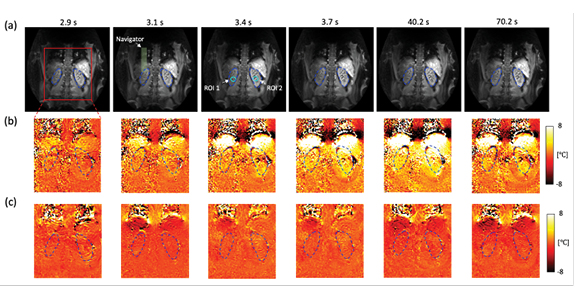
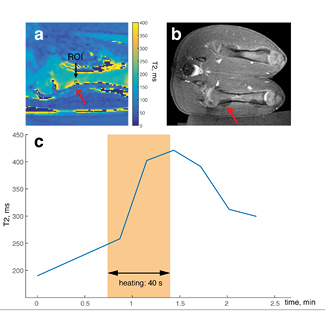
MRI provides two distinct advantages for guiding focused ultrasound. First, the ability to rapidly obtain multiplanar and multiparametric images allows for accurate and contemporaneous tumor localization, improving FUS targeting. Second, MR thermometry allows for real-time pixel-by-pixel temperature monitoring during the sonication, so that the extent and degree of tissue heating can be controlled and monitored. That is, MR thermal feedback during FUS treatment provides non-invasive monitoring for a non-invasive treatment. Other methods of guiding FUS, primarily the use of endorectal ultrasound for prostate therapy do not provide these advantages of precise tumor localization and treatment monitoring. Ultrasound does not have any thermal imaging capabilities, and ultrasound guided FUS depends on visualization of imprecise secondary changes in echogenicity. Accurate anatomic localization is particularly important in the prostate because of the proximity of the rectal wall, urethra, and neurovascular bundles. MRI provided superior visualization of these sensitive structures, for which inadvertent damage results in substantial patient morbidity. The distressing side effects (impotence, incontinence, and anorectal dysfunction) of prostatectomy and radiotherapy are primarily due to injury to the neurovascular bundle, urethral sphincter, and rectum. It is hoped that the ability to directly visualize and protect these structures while precisely targeting and ablating cancer will be an advantage of MR guidance and monitoring when compared to the relatively crude guidance and monitoring provided by ultrasound, whether for delivery of cryosurgery or focused ultrasound.  However, rigorous studies will be required to investigate the true risks and outcomes of MR-guided treatment of prostate cancer.  In summary, the combination of MR guidance and thermometry for focused ultrasound therapy provides a unique method of accurate and real-time targeting and treatment monitoring of a minimally invasive and precise method of tissue ablation; such rigorous monitoring will hopefully minimize side-effects related to unintended ablation of adjacent tissues.

What conditions can be treated at UCSF by MRg-FUS?

We plan to offer MRg-FUS to patient groups, once the system has been installed and appropriate regulatory approval has been obtained:

  • Patients with fibroids who are eligible for research recruitment. UCSF is now providing MRgFUS for women enrolled in a randomized clinical trial. For more information, please visit the National Center of Excellence in Women's Health website.
  • Patients with painful bone cancer who are eligible for research recruitment. UCSF is planning to participate in an FDA-approved research trial entitled “A Pivotal Study to Evaluate the Effectiveness and Safety of MR-Guided Focused Ultrasound Treatment of Metastatic Bone Tumors for the Palliation of Pain in Patients Who are not Candidates for Radiation Therapy”. If you may be interested in participating in this study or have questions, please contact Thelma Munzo at 415-353-9446.
  • Patients with prostate cancer who are eligible for research recruitment. UCSF is planning to participate in a research trial entitled “Focal MR-Guided Focused Ultrasound Treatment of Localized Low-Risk Prostate Cancer: Feasibility Study”, once the trial has received FDA and UCSF CHR approval. If you may be interested in participating in this study or have questions, please call Dr. Coakley at 415-353-1821.

What happens before an MRg-FUS procedure?

Several tests and discussions are required before performing an MRg-FUS procedure, in order to make sure that only appropriate patients who are likely to benefit from the procedure and who do not have any risk factors that would be a contra-indication to performing the procedure are selected. The exact requirements vary with the condition being treated, but at a minimum MRI of the treatment target (uterus, bone, or prostate) is required in all cases. It is preferable but not always essential for this MRI to be performed at UCSF.

What happens during an MRg-FUS procedure?

The length of the procedure is variable, depending on what condition is being treated, but most cases last at least 3 hours. For women with fibroids, the patient lies on their stomach within the MRI scanner. Mild sedation and pain medicine are used to reduce discomfort and anxiety during the procedure, but patients remain conscious and are able to communicate throughout the treatment. Initial images are obtained to confirm the target is still accessible and appropriate. Then separate pulses of focused ultrasound energy are applied through the skin using a transducer that is in the table top of the MRI scanner, each known as a sonication and lasting about 20 seconds, are used to kill the fibroid in a piece by piece fashion. It is normal to feel a warming sensation during the sonications. Patients are given a safety stop button that allows them to immediately stop the sonication in the unlikely event that the treatment becomes painful. At the end of the study, an injection of an MRI contrast dye (“gadolinium”) is injected to confirm that the target fibroid(s) has been successfully destroyed.

MRg-FUG procedure

What happens after an MRg-FUS procedure?

After MRg-FUS, patients are allowed to rest comfortably while the effects of any medication given are allowed to wear off. Occasionally, patients with fibroids may experience some abdominal pain or discomfort or menstrual-like cramping, and if needed, the physician will provide instructions or a prescription for pain-relieving medication after discharge (often only over-the-counter pain relief medication is required). Most women are able to return to work the next day or the day after. Patients who are part of a clinical trial may be asked to fill up questionnaires or other forms in the weeks and months after the procedure to determine treatment outcome and evaluate if MRg-FUS is an effective treatment that should be offered to other patients.

top

About Us

  • Department Overview
  • Clinical Sections
  • Advancing Technology
  • Upcoming Seminars
  • People
  • Jobs
  • News

Locations

  • All Locations
  • Parnassus
  • China Basin
  • Mission Bay
  • Mount Zion
  • San Francisco General Hospital
  • VA Medical Center
  • Contact Us
  • Donate
  • Sitemap
  • Internal
  • Schedule an Appointment
UCSF Imaging on TwitterUCSF Imaging on FacebookUCSF Imaging on YouTubeUCSF Imaging Blog

© 2012 The Regents of the University of California